Dry season — roughly March to October
Lower water levels concentrate wildlife along the banks, riverside trails stay firm for jungle walks, and elephant herds are more often encountered along the corridor. This is peak season — the operator's July–September surcharge window (RM100/pax on some packages) tells you exactly when demand tops out. Book lodges months ahead for those dates, and earlier still for anything involving Selingan Island's limited capacity.
Wet season — roughly November to February
Afternoon downpours and higher water, with genuine advantages: boats push deeper into small tributaries and oxbow channels unreachable in the dry, lodges quiet down, and the forest is at its most dramatic. Cruises run rain or shine — ponchos are standard kit — and in severe weather operators substitute activities rather than cancel.
The daily rhythm beats the seasonal one
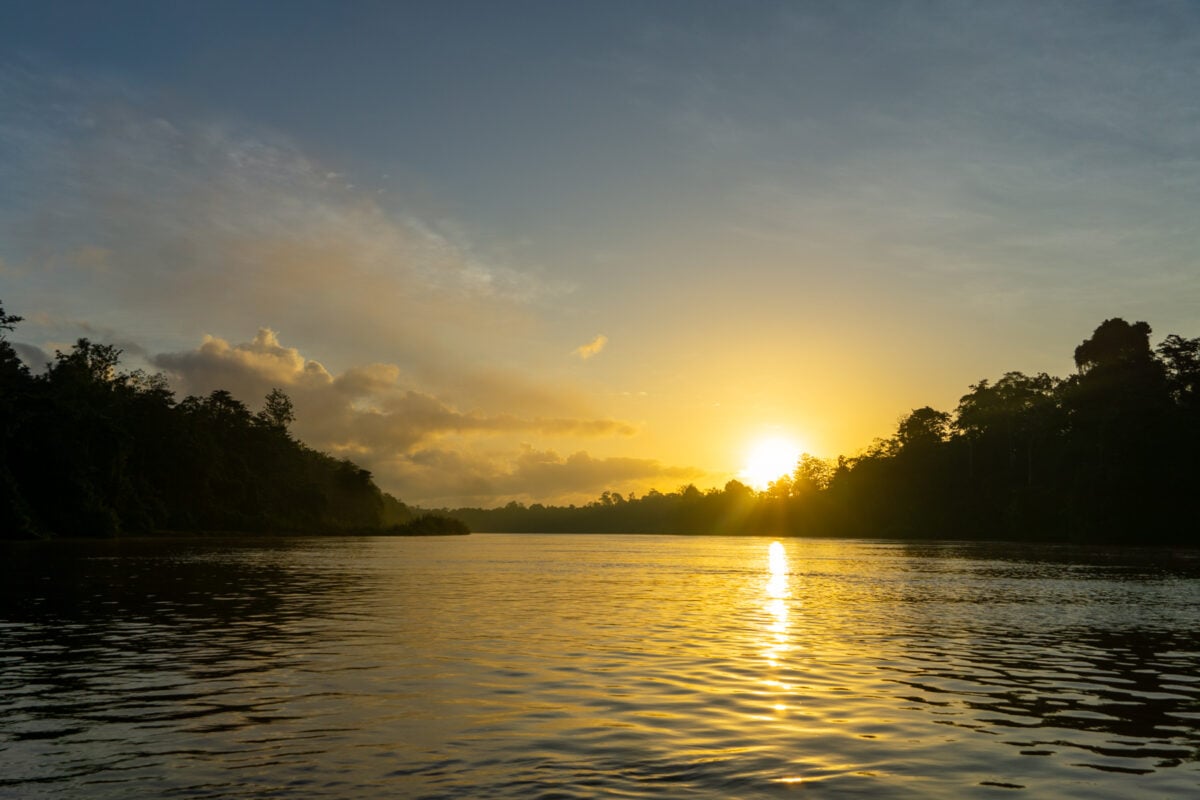
Whatever the month, wildlife activity follows the sun: dawn (~6:00 AM) for birds and mist, late afternoon (~4:00 PM) for primates at the banks, night (~7:30 PM, selected lodges) for crocodiles, civets and fireflies. Two full days on the river within your chosen window is the planning rule that matters most.
Frequently asked questions
What is the best month to visit?
Any month works; March–October offers the easiest conditions and July–September is peak demand. For quieter lodges and deeper tributary access, consider November–February.
Does it rain every day?
In wetter months, brief afternoon downpours are common but rarely wipe out a day — cruises run rain or shine.
When are pygmy elephants seen?
Sightings are movement-dependent year-round, with dry-season riverbank concentration generally improving odds. No operator can guarantee elephants — treat any promise as a red flag.
When should I book?
For July–September travel, several months ahead. Shoulder months are flexible, but Selingan Island capacity is limited year-round.