The cast, by encounter
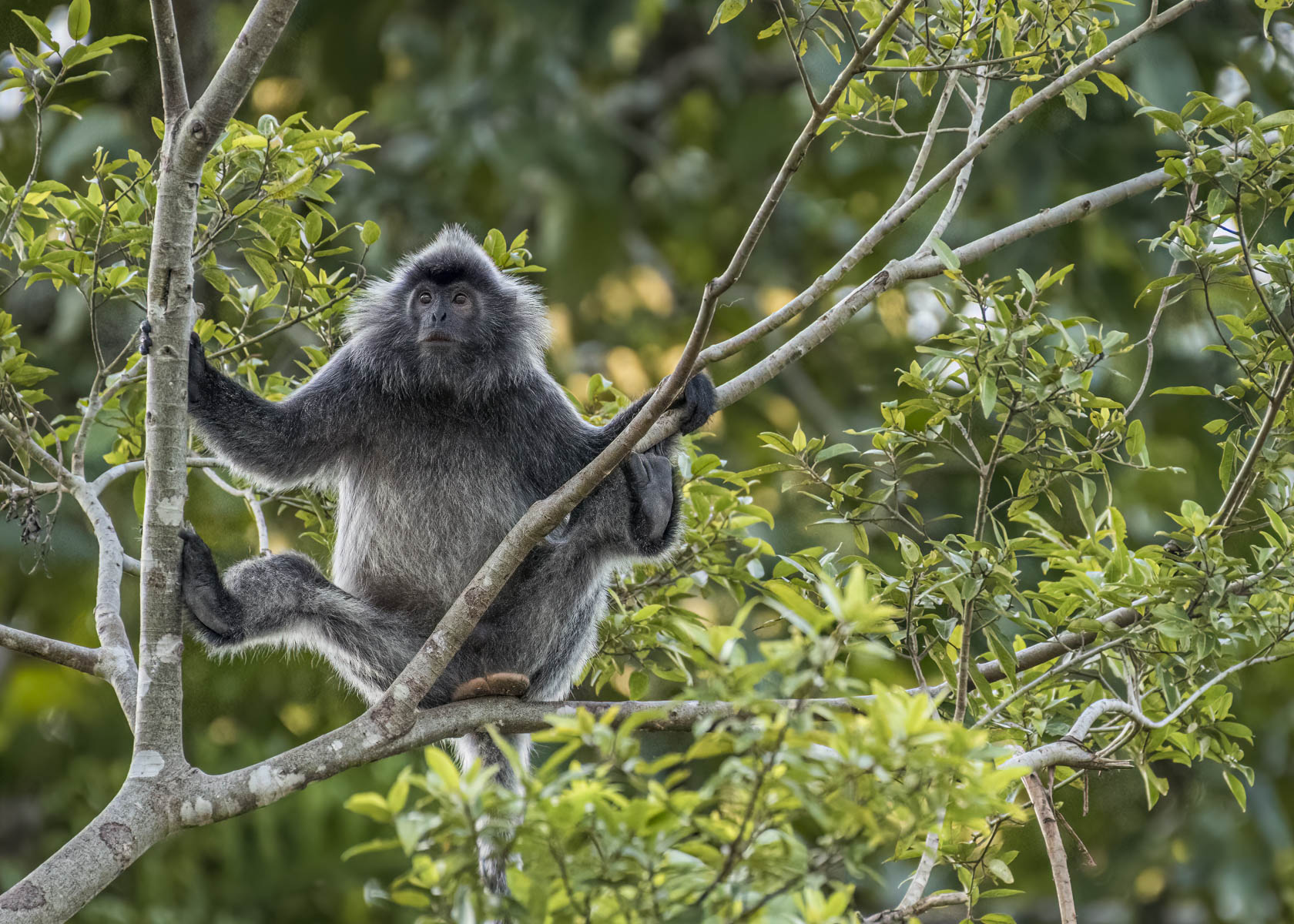
From the boat, daily: long-tailed macaques working the banks, pig-tailed troops crossing logs, proboscis harems at dusk, silvered langurs — silver-grey adults with vivid orange infants — in the mid-canopy. Regular with luck: wild orangutans in fruiting figs; maroon langurs flashing red through the crowns. Heard more than seen: Bornean gibbons, whose whooping dawn duets carry a mile down the river — the floodplain's alarm clock. After dark: western tarsiers and slow lorises on lodge night walks, found by eyeshine on low trunks and vines.
Why ten species can share one forest
Niche separation in a rich mosaic: leaf-eaters (langurs, proboscis) split the canopy by height and leaf type, fruit specialists (orangutan, gibbon) track the fig crop, generalist macaques work the edges, and the nocturnal pair hunts insects after the others sleep. The compressed corridor makes the whole system unusually visible — which is both the visitor's luck and the conservation warning.
Frequently asked questions
What primates live on the Kinabatangan?
Ten species: Bornean orangutan, proboscis monkey, Bornean gibbon, three langur species, two macaques, western tarsier and slow loris — one of only two known ten-primate sites on Earth.
Can I see gibbons on a cruise?
You will almost certainly hear their dawn duets; seeing them takes luck, as they keep to high canopy away from the banks.
How do I see the tarsier and slow loris?
On guided night walks at the lodges — both are nocturnal and found by eyeshine. Packages that include night walks (e.g. the Tanini 3D2N) give the best chance.