What a wild sighting looks like
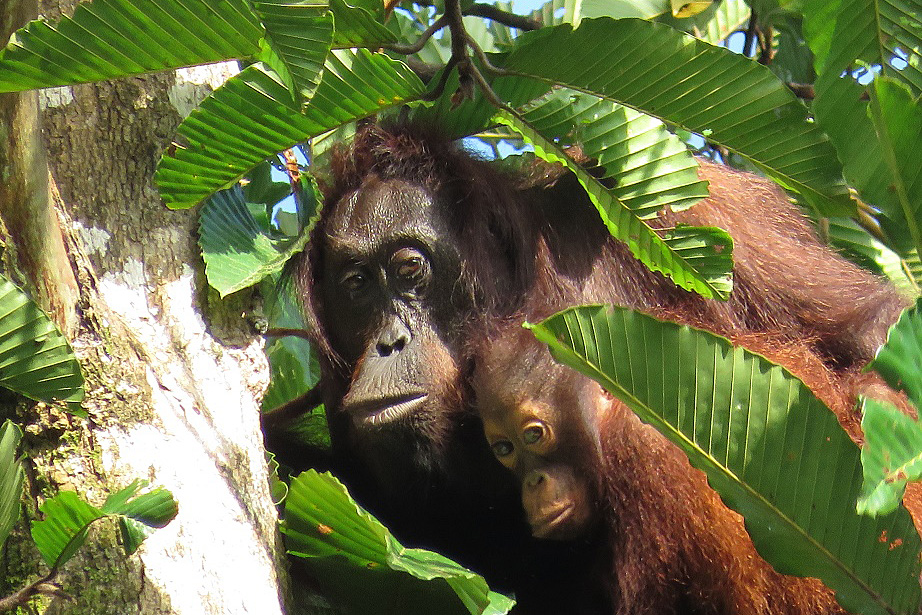
Wild orangutans don't perform. Your guide finds them because a branch moved — then the boat drifts under a fig tree where an adult feeds unhurriedly, or a female with an infant builds her night nest in the last light. Along tributaries like the Menanggul, conservationists have strung rope bridges so orangutans can cross water they cannot swim; catching a crossing is a famous stroke of luck. The Kinabatangan Orangutan Conservation Project has studied this population since 1998 — one of the longest-running wild orangutan research efforts anywhere.
Wild river vs Sepilok — do both
The Sepilok Orangutan Rehabilitation Centre (established 1964, on the road between Sandakan and the river) cares for orphaned and displaced orangutans and returns them to the forest; its feeding-platform sessions offer close, reliable viewing. The river offers the opposite: uncertain, unstaged, wild. Nearly every multi-day package includes both — Sepilok on the drive in, wild apes from the boat — which is exactly the right order to appreciate the difference.
Why they're here at all
The floodplain population survived because the riverside forest did — the sanctuary's 26,103 protected hectares and the corridor-reconnection work keep these apes connected to enough forest to live wild. Regulated tourism is part of that economic case; choosing licensed operators funds it.
Frequently asked questions
Will I see a wild orangutan on the Kinabatangan?
Sightings are regular but never guaranteed. Across three or more cruises, most visitors see at least one — which is why 3D2N packages with four cruises are the standard recommendation.
What is the difference between Sepilok and the river?
Sepilok is a rehabilitation centre with reliable close viewing of rescued orangutans; the river is wild habitat with unstaged sightings. Most packages include both.
How many orangutans live on the Kinabatangan?
Roughly 1,000 are estimated in the Lower Kinabatangan area, studied since 1998 by the Kinabatangan Orangutan Conservation Project.