Sabah · Malaysian Borneo · The Complete Guide
The Kinabatangan is Sabah's longest river — 560 kilometres from the Witti Range to the Sulu Sea. Along its lower floodplain, forest corridors squeeze proboscis monkeys, wild orangutans, pygmy elephants and eight hornbill species to the water's edge, where a slow boat and a sharp-eyed guide will find them for you.
Planning in 30 seconds: fly to Sandakan, transfer 2–2.5 hours to a river lodge at Sukau, Bilit or Abai, and stay 3D2N — enough for morning, afternoon and night cruises. All-inclusive packages with meals, transfers and guided cruises start from RM600 (day trip) and RM780 (overnight), verified September 2026. Bookings for 2026 and 2027 are open.
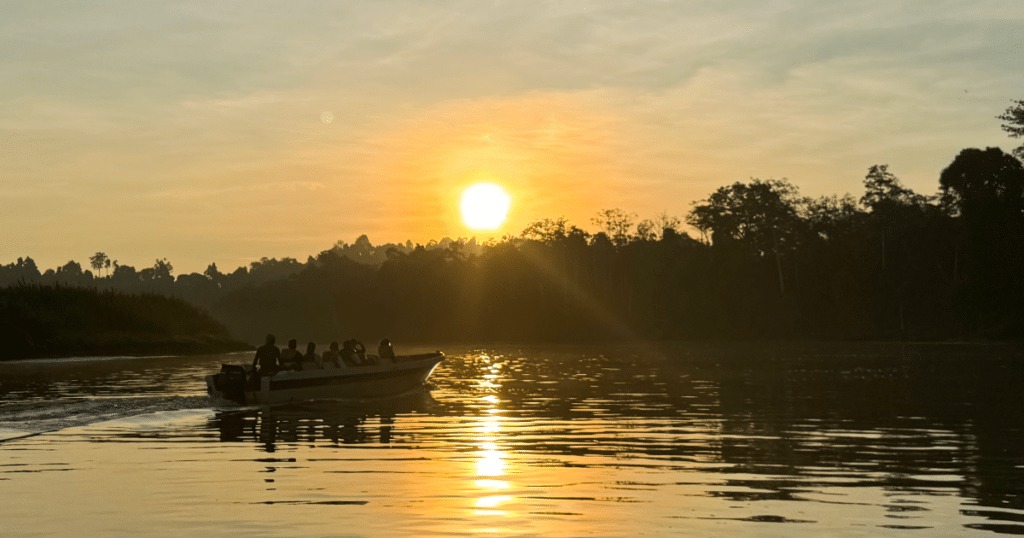
The rhythm of the river
Mist on the water, hornbills crossing, kingfishers and reptiles in the early light. The river at its quietest.
Best for · Birds & atmosphereThe classic. Proboscis monkeys gather at the banks to sleep, orangutans build night nests, and the light turns gold.
Best for · Primates & sunsetSpotlights find crocodile eyes, sleeping birds, civets and owls. At Abai, the mangroves glitter with fireflies.
Selected lodges · Nocturnal wildlife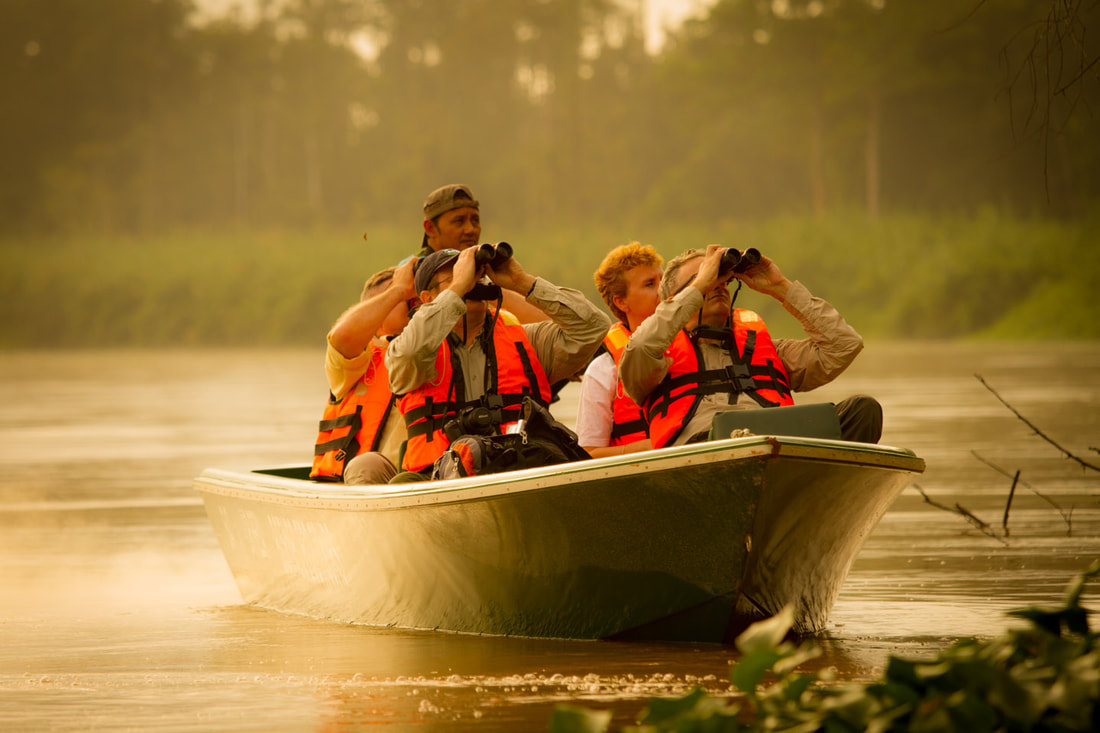
Who you'll meet
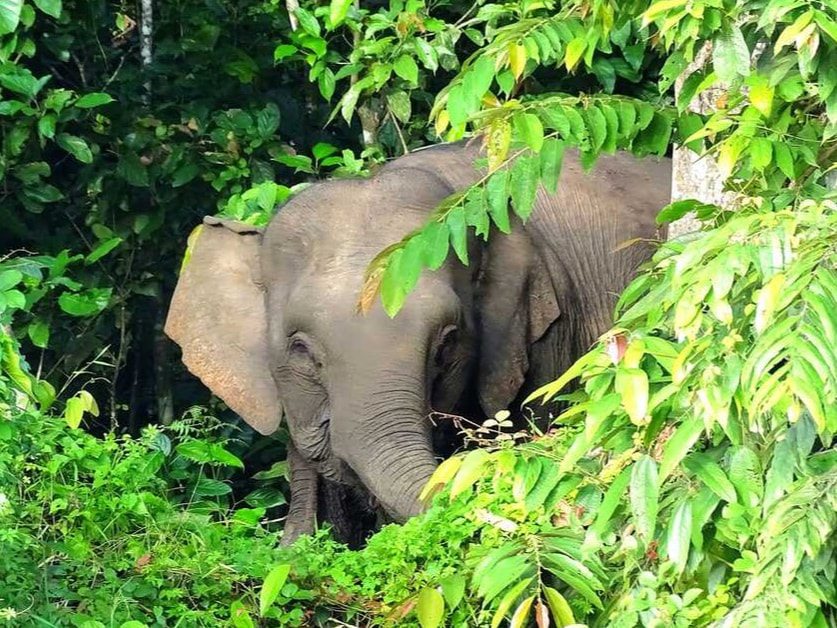
This floodplain is one of the only places on Earth where all of the following share one riverbank. No sightings are guaranteed — this is wild Borneo — but across two or three cruises, most visitors meet most of this list.
Downriver, in order
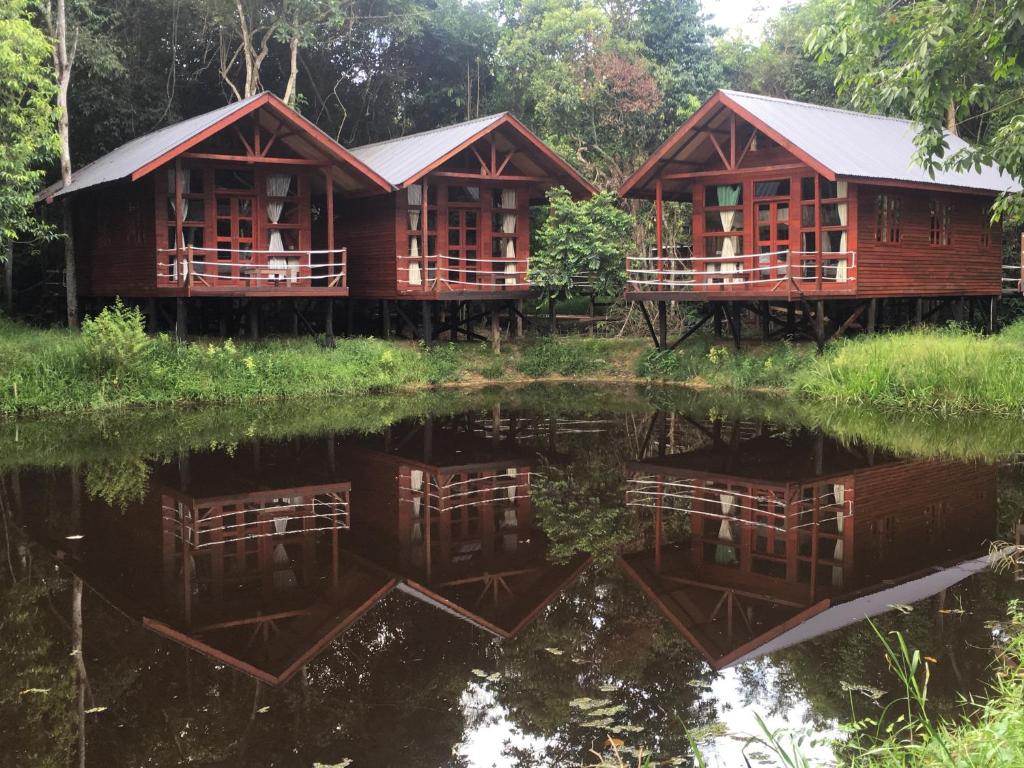
Three lodge clusters sit along the lower Kinabatangan River, each with its own character. Combination tours cover more than one.
A village bend with lodges from backpacker to eco-resort. Bilit sits on a stretch pygmy elephant herds pass through, with wide main-river cruising and quick access to jungle trails.
Bilit guide →The signature cruise turns off the main river here into the narrow Menanggul tributary — proboscis monkeys, kingfishers, crocodiles and orangutans at close range. Most lodges, most options.
Sukau guide →Closer to the river mouth: fewer boats, wilder feel, early-morning birdwatching at Pitas Lake and mangroves glittering with fireflies after dark. The connoisseur's stretch.
Abai guide →All-inclusive · Meals, transfers, cruises & guide
The minimum viable Kinabatangan: the famous birds'-nest caves and one wildlife cruise, back in Sandakan by evening.
Cruises at every time of day plus a jungle walk — seven packages from budget Bilit to two-lodge expeditions.
Two river areas, the most cruises, mangroves to Menanggul — the best odds for elephants and wild orangutans.
Reference
The Kinabatangan — Sungai Kinabatangan in Malay — is Sabah's longest river and the second-longest in Malaysia, after Sarawak's Rajang. From its headwaters in the Witti Range, in the mountains of southwest Sabah, it flows roughly 560 kilometres northeast across the state before emptying through a broad mangrove delta into the Sulu Sea, east of Sandakan.
Its catchment is enormous: a drainage basin of about 16,800 square kilometres — nearly a quarter of Sabah's entire land area. High rainfall in the upper basin drives the seasonal flooding that built the river's defining feature: the vast lower floodplain, a landscape of riverine forest, freshwater swamp, limestone outcrops and some twenty oxbow lakes left behind as the river's meanders shifted course over centuries.
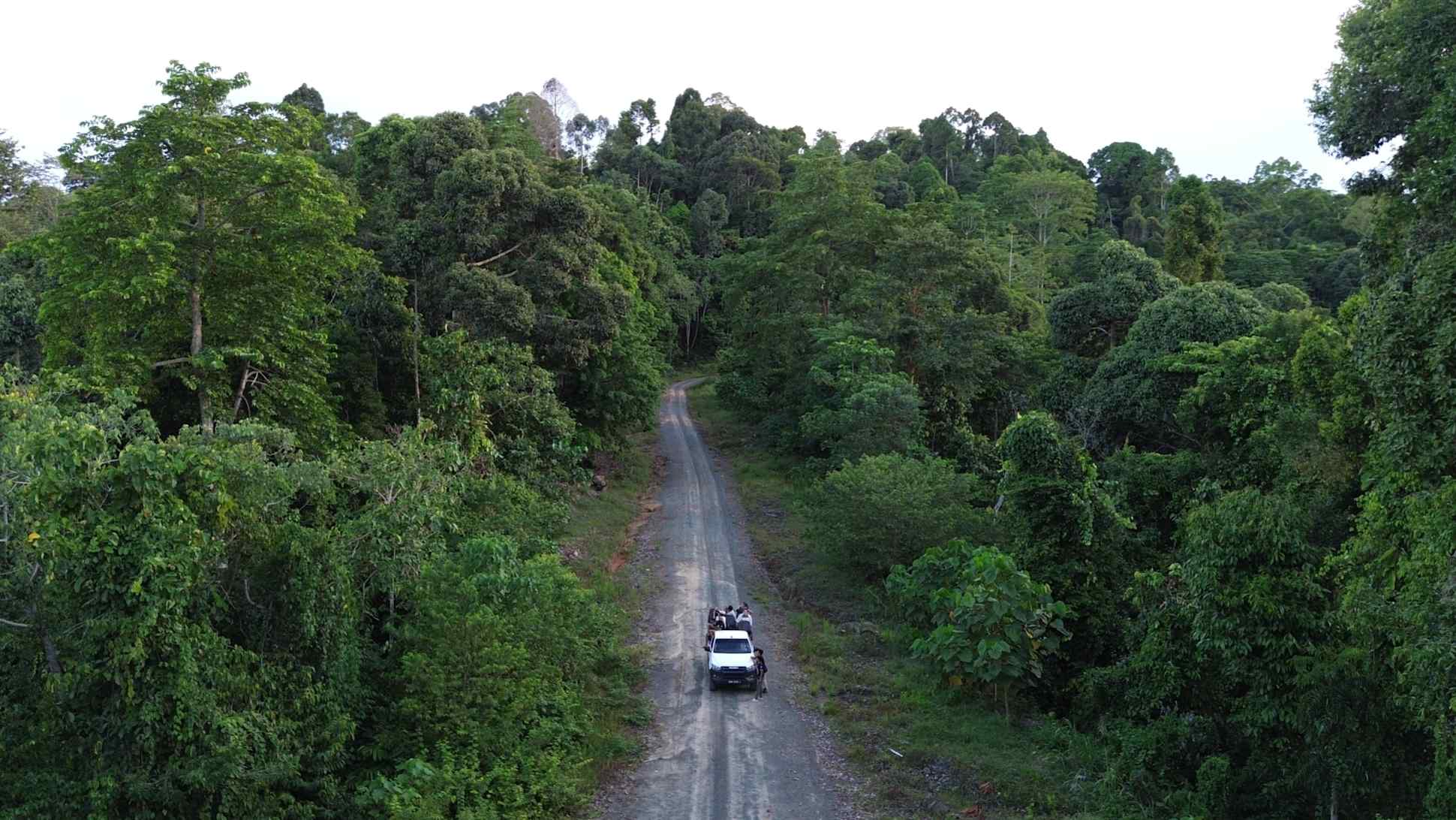
The Lower Kinabatangan's extraordinary wildlife density is partly a story of abundance — and partly one of loss. The floodplain naturally supports exceptional biodiversity: according to WWF, this is one of only two known places on Earth where ten primate species coexist, among them the Bornean orangutan, proboscis monkey, Bornean gibbon, silvered langur, western tarsier and slow loris. Eight hornbill species and more than 200 bird species share the corridor, alongside an estimated 1,000 orangutans and several hundred Bornean pygmy elephants.
But decades of logging and oil palm conversion stripped much of the surrounding lowland forest, compressing wildlife into the ribbon of protected forest along the riverbanks. The result is the paradox that makes the Kinabatangan River famous: animals that would be dispersed through intact rainforest are instead concentrated where a boat can find them. It is the most accessible wildlife-watching in Southeast Asia — and a working argument for why the remaining corridor matters.
Protection came in stages. In 1999 the Sabah state government declared the Lower Kinabatangan a "Gift to the Earth" and a Corridor of Life. On 11 August 2005, the area was formally gazetted as a wildlife sanctuary under Section 9 of Sabah's Wildlife Conservation Enactment 1997 — parcels totalling 26,103 hectares along the river. Downstream, the Lower Kinabatangan–Segama Wetlands — 78,803 hectares of coastal forest reserves — were designated a Ramsar Wetland of International Importance in 2008.
The central conservation project on the Kinabatangan is reconnection: acquiring and reforesting land to link the sanctuary's fragments into a continuous corridor from the uplands to the Ramsar wetlands. Research presence is long-established — the Kinabatangan Orangutan Conservation Project has worked in the floodplain since 1998 — and lodges and tour operators fund tree-planting and corridor purchases directly from tourism revenue. That makes visiting a genuine part of the model: regulated river tourism is the economic case that keeps the corridor forested. Conservation guide →
The Kinabatangan is a lived-in river. The Orang Sungai — "river people" — have farmed, fished and traded along its banks for centuries, in villages like Sukau, Bilit, Abai and Batu Puteh. The limestone caves at Gomantong have been harvested for edible birds' nests for generations, and the Agop Batu Tulug caves upstream hold centuries-old carved ironwood coffins.
Logistics
The gateway is Sandakan, on Sabah's east coast — a 45-minute flight from Kota Kinabalu, with direct flights from Kuala Lumpur too. From Sandakan, the river lodges at Sukau, Bilit and Abai are around 2 to 2.5 hours away. In practice, almost nobody arranges this independently: every tour includes pickup from the airport or your hotel, the transfer, and the boat leg — most itineraries break the drive at the Sepilok Orangutan Rehabilitation Centre, timed for the morning feeding. Full transport guide →
Timing
There is no bad season — cruises run every day of the year. The drier months, roughly March to October, bring easier conditions: lower water concentrates animals along the banks, and elephants are more often encountered. The wetter months mean afternoon downpours but can push boats deeper into small tributaries. Whatever the month, dawn and dusk matter more than the season — which is why staying overnight beats any day trip. Month-by-month guide →
Takes 30 seconds. Pick a trip or let us recommend one.
Before you go
