Why so much wildlife in one place
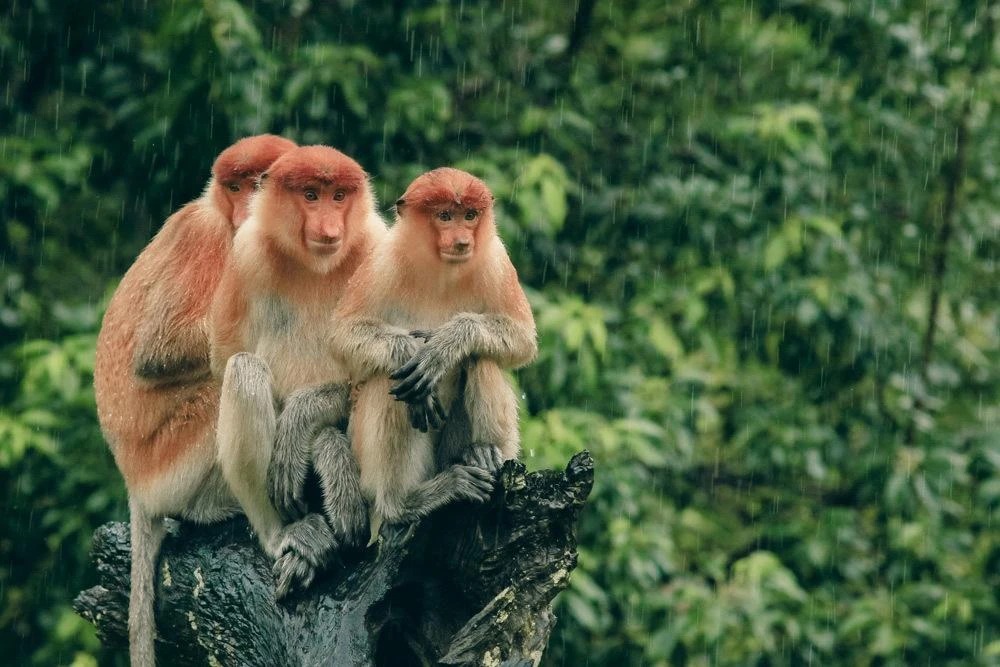
The Lower Kinabatangan floodplain naturally supports exceptional diversity — riverine forest, swamp, limestone and oxbow lakes in one mosaic. Decades of surrounding forest conversion then compressed that wildlife into the protected corridor along the banks (the 26,103-hectare Lower Kinabatangan Wildlife Sanctuary, gazetted 2005). The result is the river's famous paradox: animals that would be dispersed through intact rainforest concentrate where a slow boat can find them.
The headline species
Proboscis monkeys — endemic to Borneo, gathered at the banks every evening. Wild orangutans — an estimated ~1,000 in the sanctuary area. Bornean pygmy elephants — the world's smallest elephant, moving in herds along the corridor. Estuarine crocodiles — commonly seen on mudbanks. Hornbills — all eight Bornean species recorded here. Ten primates in total, from gibbons to tarsiers. 200+ bird species, and fireflies after dark at Abai.
Honest sighting odds
Near-guaranteed across a 2–3 cruise stay: proboscis monkeys, macaques, crocodiles, hornbills, kingfishers. Regular but not certain: wild orangutans — three or more cruises shift them from lucky to likely. Seasonal and luck-dependent: pygmy elephants. Never trust a "guaranteed elephants" claim — herds move on their own schedule, and honest operators say so.
Frequently asked questions
What animals can I see on the Kinabatangan River?
Proboscis monkeys, macaques, langurs, wild orangutans, Bornean pygmy elephants, estuarine crocodiles, all eight Bornean hornbill species and over 200 bird species — plus civets, owls and fireflies on night cruises.
Is the Kinabatangan a zoo or sanctuary?
Neither — it is wild habitat. The Lower Kinabatangan Wildlife Sanctuary protects 26,103 hectares of forest along the river; all animals are free-ranging and sightings are natural.
What is the rarest sighting?
Bornean pygmy elephants and clouded leopards. Elephants are seasonal; clouded leopards are almost never seen but present.