The eight, briefly
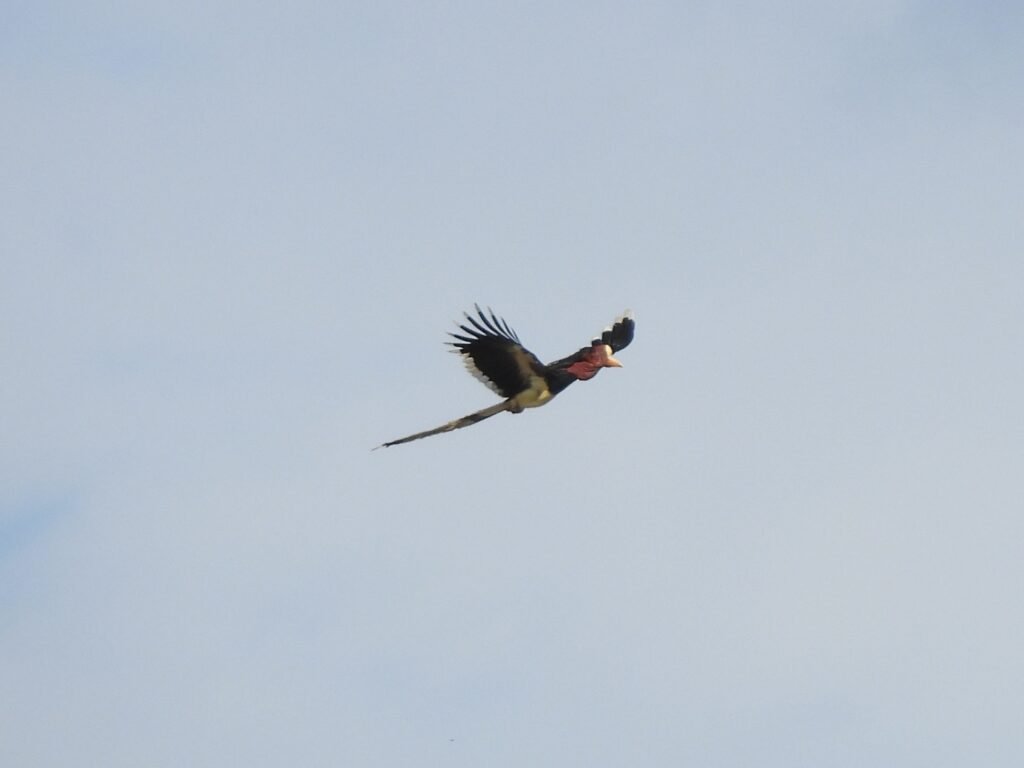
The rhinoceros hornbill — huge, black-and-white with an upswept orange casque — is Sabah's icon and a regular dusk crossing. Oriental pied hornbills are the most commonly seen, often in riverside flocks. The helmeted hornbill, critically endangered for its solid "ivory" casque, is the rarest prize; hearing its maniacal accelerating call is itself a notable record. Black, bushy-crested, wrinkled, wreathed and white-crowned hornbills complete the set. Hornbills pair for life and nest in tree cavities — the female sealed inside while the male feeds her — which makes them living indicators of big-tree forest health.
When and where from the boat
Any cruise can produce hornbills, but the pattern favors dusk on the wide main river, when birds commute to roosts and cross between banks in silhouette. Morning cruises catch them feeding in fruiting figs. Guides identify them by call and wingbeat long before binoculars find them — the rhinoceros hornbill's wing-whoosh carries across the water.
Frequently asked questions
Which hornbills can I see on the Kinabatangan?
All eight Bornean species are recorded here: rhinoceros, oriental pied, black, bushy-crested, wrinkled, wreathed, white-crowned and helmeted hornbills.
When is the best time to see hornbills?
Dusk, on the main river — birds cross between banks on the way to roosts. Morning cruises catch them at fruiting trees.
Why are hornbills important?
They need large tree cavities to nest, so healthy hornbill numbers indicate intact, big-tree forest — and they disperse fig seeds across the landscape.