Borneo's strangest monkey
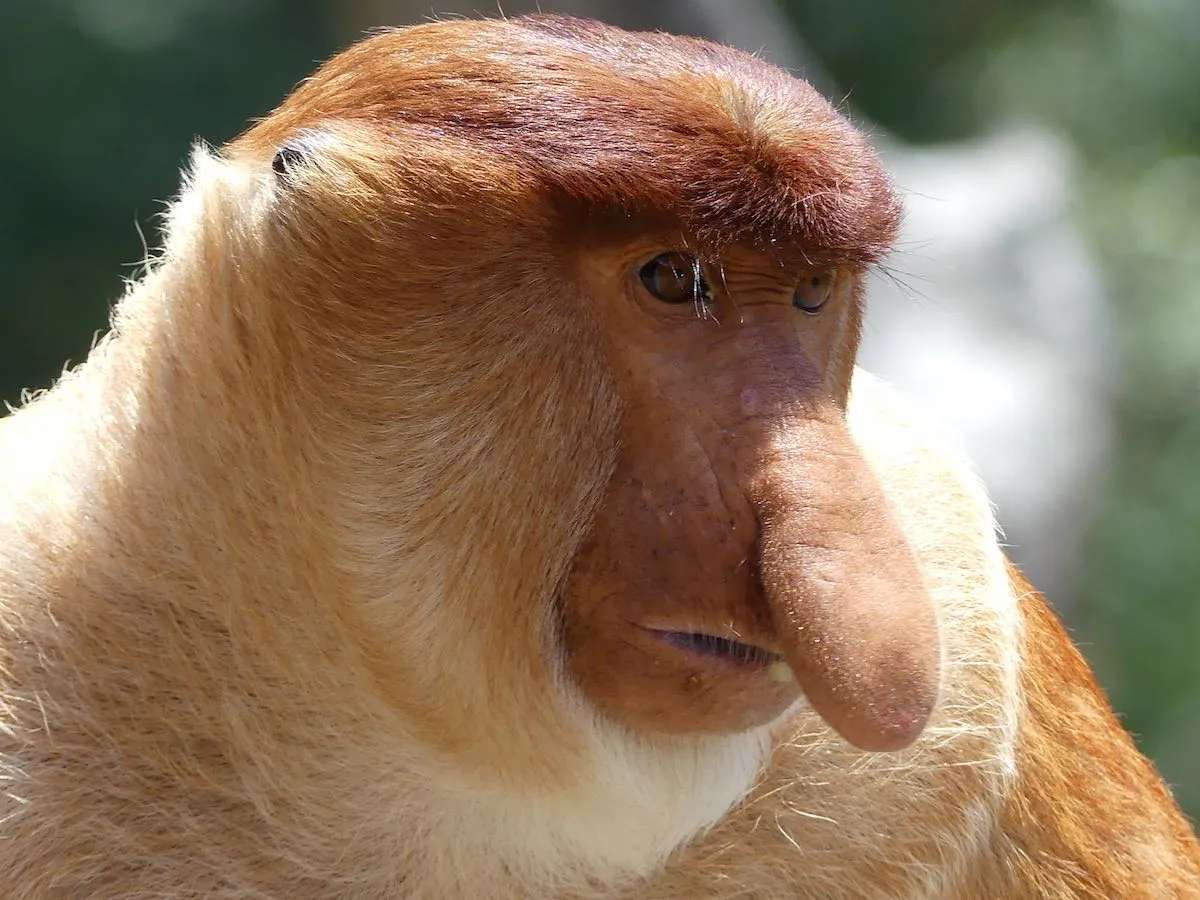
Found only on Borneo, the proboscis monkey is built for river life: partially webbed feet, strong swimming, and a diet of leaves and unripe fruit processed in a large, pot-bellied gut. Males carry the famous pendulous nose — the bigger, the better for attracting females and amplifying their honking calls. They live in harems — one dominant male with females and young — and in bachelor groups of ousted males, and they sleep in trees at the water's edge, which is exactly why the evening cruise finds them so reliably.
Where and when to see them
Every stretch of the lower river has them, but the Menanggul River from Sukau puts you closest — harems settle into the low tributary trees at near eye-level. Timing: the last two hours before sunset, as groups commute to their sleeping trees, often crashing spectacularly between branches. Mornings work too, catching them before they move inland to feed.
Photography notes
Golden-hour light on the afternoon cruise does half the work. Bring the longest lens you have, expose for the backlit fur, and wait for the leap — males belly-flop between trees with total commitment. Flash is prohibited, and boats keep respectful distance; the animals tolerate quiet observers.
Frequently asked questions
Are proboscis monkeys guaranteed on a cruise?
As close as wild Borneo gets — harems gather at the riverbank every evening, and afternoon cruises rarely miss them. Across a 2–3 cruise stay, a miss would be genuinely unusual.
Why do proboscis monkeys have big noses?
Only mature males carry the large nose; it signals status to females and amplifies their calls. Females and juveniles have smaller, upturned noses.
Where else can I see proboscis monkeys?
Only on Borneo — riverine and mangrove forest in Sabah, Sarawak, Brunei and Kalimantan. The Kinabatangan is among the most reliable viewing sites anywhere.