Inside the caves
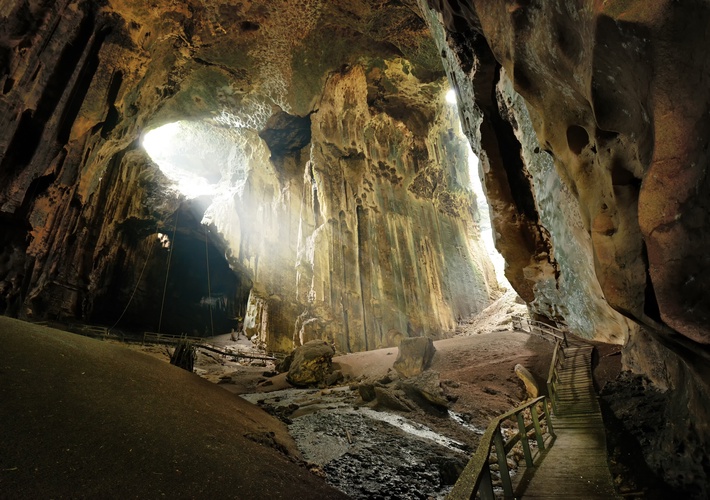
The system's chambers house huge colonies of swiftlets whose nests — built from hardened saliva — are the prized ingredient of birds'-nest soup. Licensed harvesters climb rattan ladders to the ceiling in seasons regulated for sustainability, a practice generations old. The sensory reality is part of the visit: ammonia, guano mounds alive with insects, and the roar of wings in the dark above. It is genuinely spectacular and genuinely pungent; closed shoes and a sense of humor are the kit.
The dusk exodus
At dusk, hundreds of thousands of bats stream from the cave mouths in twisting ribbons while bat hawks and peregrines hit the columns — one of Borneo's great predator-prey spectacles, watched from the viewing area outside. Day tours timed for late afternoon catch it before the drive back; some river itineraries schedule Gomantong precisely for this.
Frequently asked questions
What are the Gomantong Caves famous for?
Edible birds' nests — swiftlet colonies whose nests are harvested under license for birds'-nest soup — and a spectacular dusk bat exodus.
Which tours include Gomantong?
The full-day Gomantong + Kinabatangan cruise (RM600) and the 3D2N Sepilok/Sukau/Ox-bow/Gomantong (RM1,920).
Is the cave visit difficult?
No — a boardwalk circuit crosses the main chamber. Expect strong guano smell and insects; wear closed shoes.