The smallest elephant on Earth
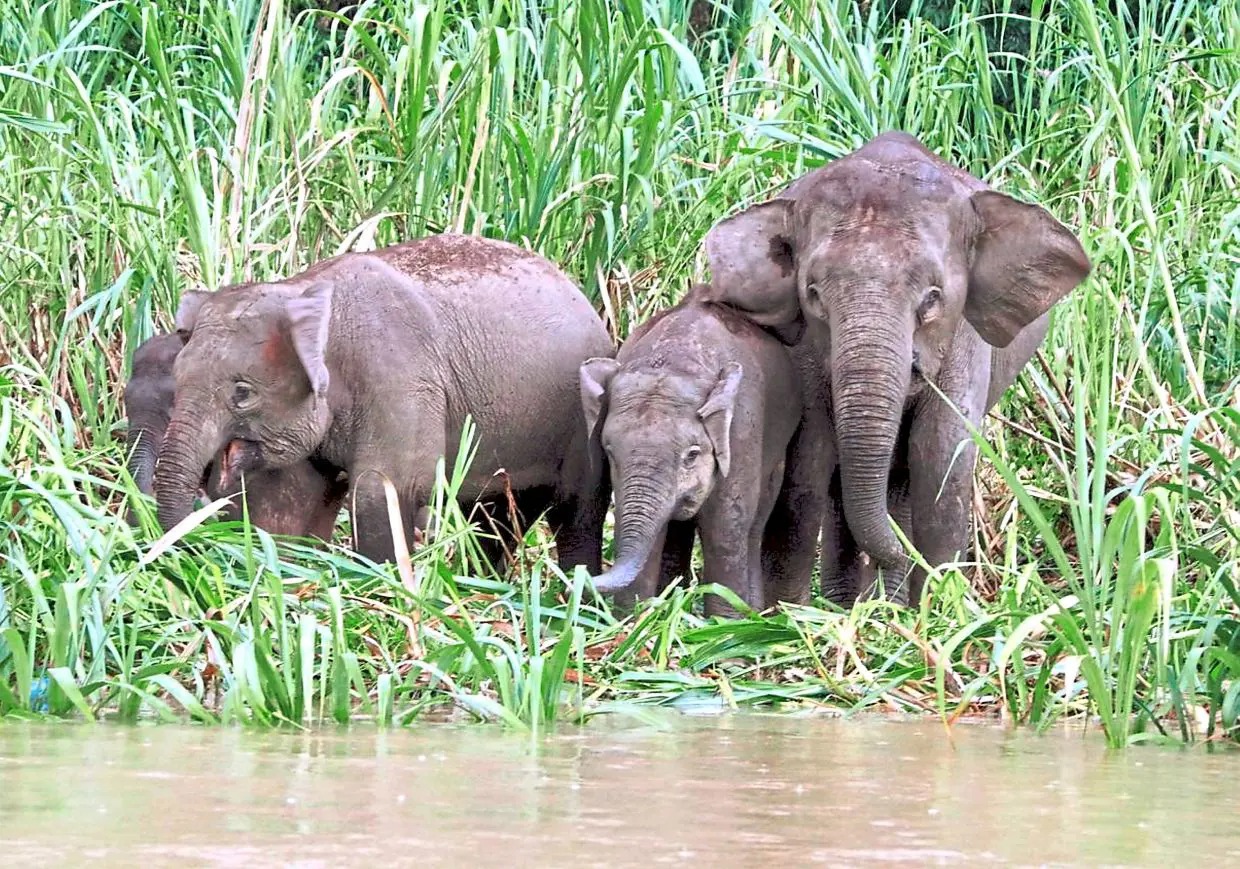
Bornean pygmy elephants are the smallest of all elephants — notably smaller than mainland Asian elephants, with oversized ears, long tails that can brush the ground, and a famously gentle temperament. A few hundred are estimated to live along the Kinabatangan, moving in family herds through the forest corridor and coming to the river to feed, drink and cross. Their survival is tied directly to the corridor: fragmented forest forces herds through plantations and villages, which is why the Corridor of Life reconnection work matters most for this species. [VERIFY current population estimate with Sabah Wildlife Department before hardening figures.]
Season, place and honest odds
Where: the broad main-river cruising from Bilit crosses the most-used elephant corridor; Sukau and Abai see herds too as they range. When: drier months (roughly March–October) concentrate feeding at the banks. Odds: genuinely luck-dependent — some weeks every cruise sees them, some weeks none do. Multi-day itineraries with four or more cruises give the best realistic chance, and the 5D4N circuits the best of all.
What an encounter is like
Boats cut engines and drift at distance while a herd strips grass at the water's edge, calves tucked between adults, sometimes swimming the river trunk-up. Guides keep well back — these are wild elephants, and the calm of the encounter depends on it. It is, by wide agreement, the single best wildlife moment the Kinabatangan offers.
Frequently asked questions
Are pygmy elephants guaranteed on the Kinabatangan?
No — herds move on their own schedule and any operator promising elephants should be treated with suspicion. More cruises and dry-season timing improve odds; the 5D4N circuits give the best realistic chance.
How small are Bornean pygmy elephants?
The smallest elephants on Earth — clearly smaller than mainland Asian elephants, with proportionally large ears and long tails.
When is elephant season on the Kinabatangan?
Sightings occur year-round; the drier months (roughly March–October) concentrate herds at the riverbanks more often.